
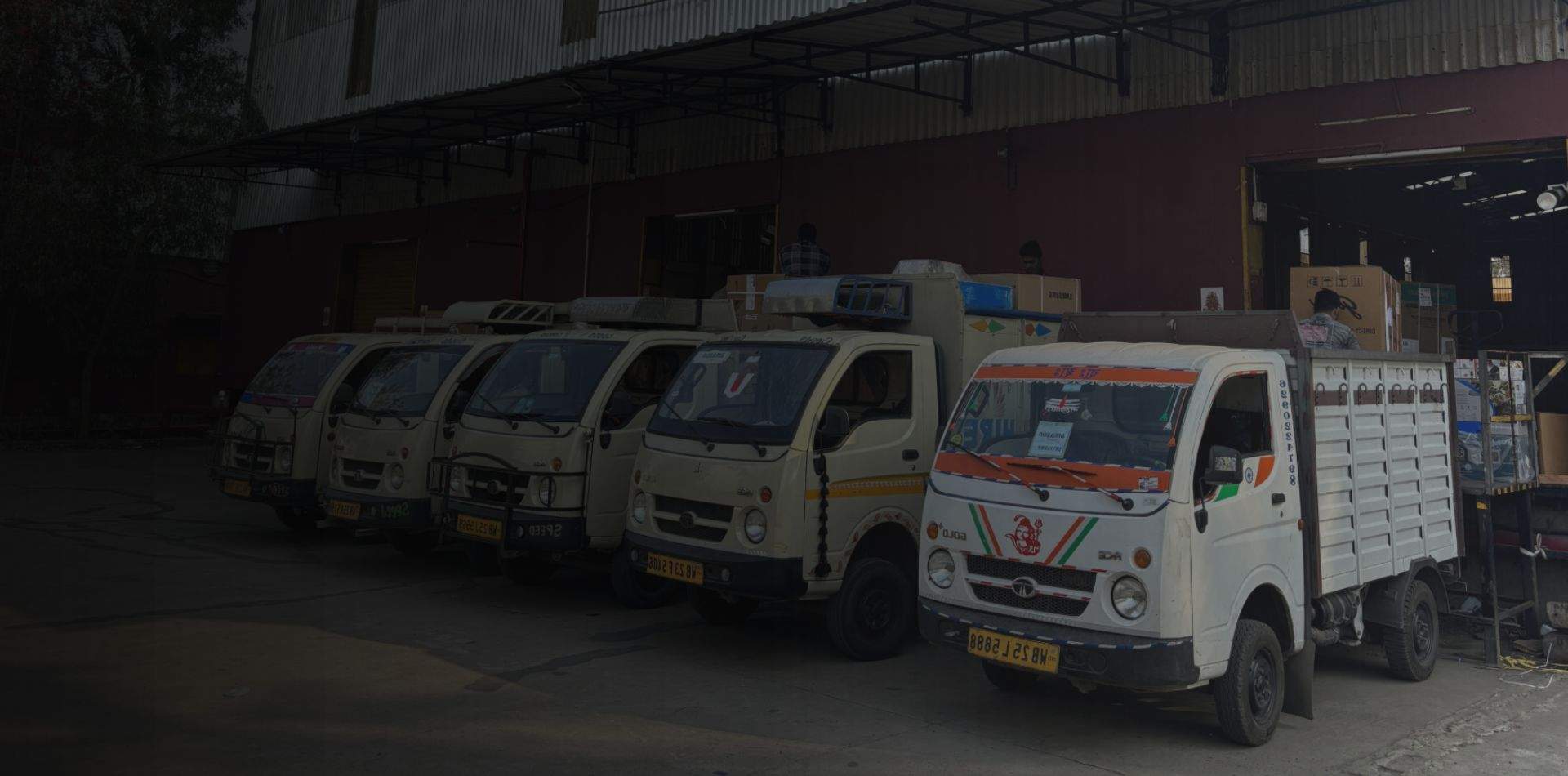

Peak-Season Feeder Fleet Across Kolkata and Howrah
Festive-season parcel volumes needed more vehicles than any single operator had spare. We mobilised a mixed ACE and Intra feeder fleet on a rolling daily roster across three districts.
The brief
A logistics partner running last-mile delivery across the Kolkata metro needed feeder capacity for the festive season. Their own fleet covered the baseline; what they could not cover was the six-week spike, where daily parcel volumes roughly doubled and the shortfall landed on short notice.
The requirement was not simply more vehicles. It was vehicles that could be re-allocated between three districts each morning, because nobody could forecast which hub would be heaviest on any given day.
How we ran it
We built the roster around the constraint that would not move, which was hub loading capacity rather than vehicle availability. Each hub was measured honestly at the start of the engagement -- how many vehicles it could actually turn round per hour, not how many it hoped to.
From that we set staging points close to each hub, so the first productive hour of the morning was not spent driving to where the work was. Vehicles were assigned to a district each morning rather than for the week, which let us move capacity to whichever hub was running heaviest without renegotiating anything.
What it delivered
Through the peak the fleet held its daily slots without the client having to source vehicles themselves. The exception alerts our dispatch desk acted on averaged fewer than five a day across the whole operation -- which is the number that matters, because a stream of alerts nobody reads is the same as no alerts at all.
What made it work
A peak-season roster is a planning problem long before it is a vehicle problem.
- Vehicles staged near first pickup rather than at a central yard.
- One named coordinator per district, reachable directly.
- Rolling daily roster instead of a fixed weekly allocation.
- GPS visibility on every vehicle, with exception alerts capped.