

Fragile-Load Distribution for an Electronics Supply Chain
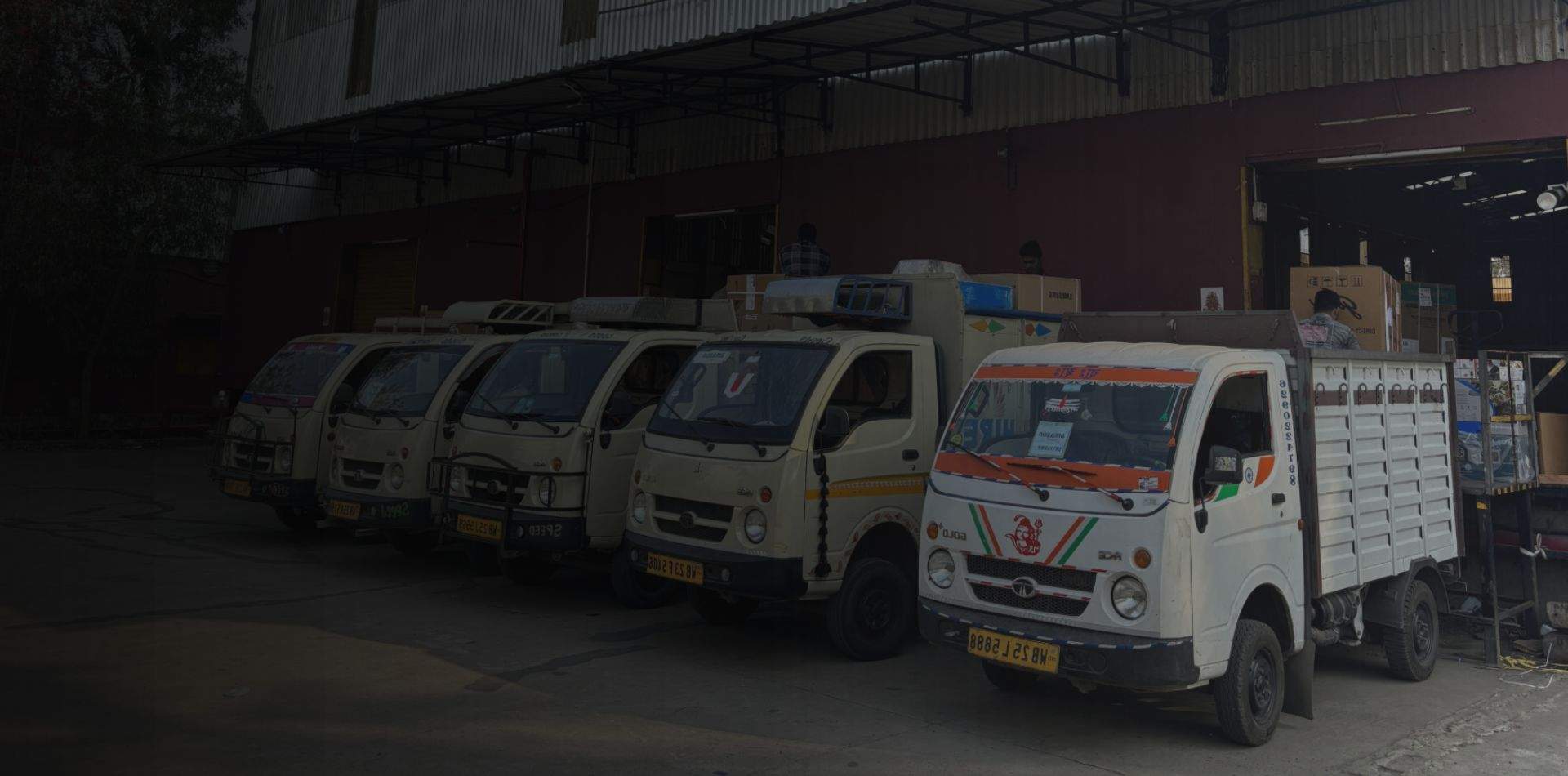
Consumer electronics move badly on an open vehicle and worse on a rough approach road. Closed-body ACE units and a revised drop sequence cut handling damage to near zero.
The brief
A distributor moving televisions, white goods and small appliances into retail across Kolkata and the southern districts was seeing damage claims they could not explain. The consignments were leaving the warehouse intact and arriving with corner damage often enough to matter.
What we found
Very little of it was happening on the road. It was happening in the last thirty metres at each end, where a vehicle could not reach the shop door and cartons were being carried in by hand, often by one person.
That is an access problem dressed up as a transport problem, and it does not get better by driving more carefully.
How we ran it
We moved the whole route onto closed-body ACE units with load bars, which solved weather and shifting in one step. More importantly, we surveyed every drop point for how close a loaded vehicle could actually park, and put a second handler on the runs where the answer was “not close”.
Drop sequence changed too: points with no covered unloading went first, ahead of the afternoon rain that is reliable across most of the state for a good part of the year.
What it delivered
Damage claims on the route fell away over the following quarter. The added handler cost was a fraction of what a single damaged large-format television had been costing to replace and re-deliver.

Where the damage was actually happening
Almost none of it was in transit. It was at the two ends of the journey.
- Closed-body vehicles only, with load bars on every run.
- Uncovered drop points sequenced first, before afternoon rain.
- Two handlers where the vehicle could not reach the door.
- Proof of delivery photographed at the point of handover.