
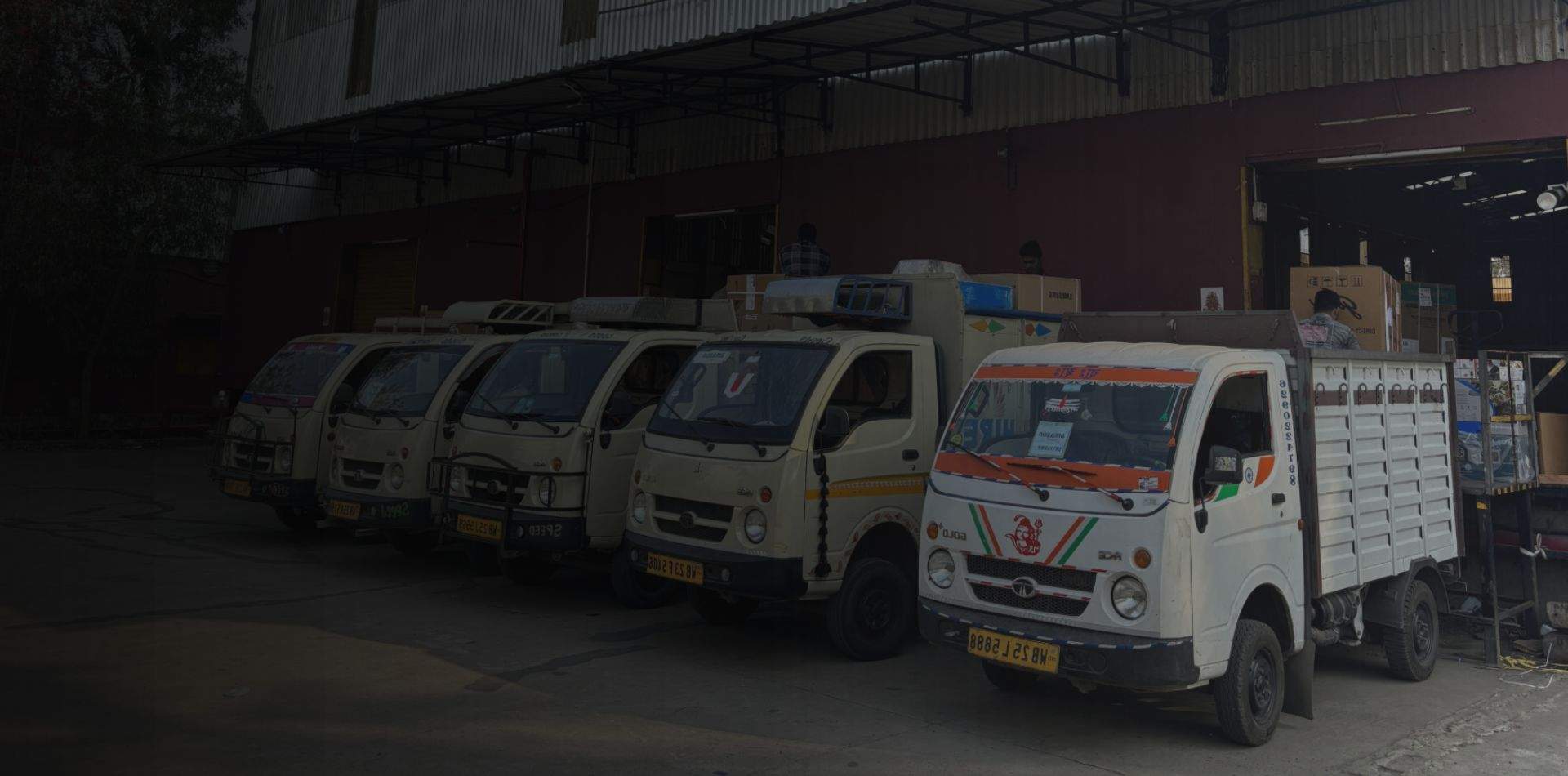


What GPS Tracking Actually Tells You About Your Consignment
A moving dot on a map is not visibility. What matters is which questions the tracking data can answer without anyone having to make a phone call.
Every transporter in the market now says their fleet is GPS enabled, ours included. It has become close to meaningless as a differentiator, because the hardware is cheap and fitting it is trivial.
What is not trivial is turning a stream of coordinates into an answer to the only question a client ever really asks, which is some version of will my goods arrive when you said they would.
What the dot on the map genuinely tells you
Position and time, and from those, speed and stop duration. That is the complete list. Everything else is inference, and the quality of your tracking is really the quality of that inference.
The three useful questions
We judge a tracking setup by whether it can answer these without a phone call:
- Is this vehicle behind, and by how much? Requires a planned schedule to compare against. A dot with no plan behind it cannot be late, it can only be somewhere.
- Is this stop expected? A forty-minute halt is a problem at kilometre ninety and completely normal at a scheduled delivery point.
- Will it still make the delivery window? This is the one clients actually want, and it needs remaining distance, historical speed on that stretch, and the time the receiving site closes.
If your tracking can only tell you where a vehicle is, it is a location service. Visibility starts when it can tell you where the vehicle should have been.
Where it goes wrong
The common failure is not technical. It is that the plan the tracking compares against is fiction - a schedule written to win the contract rather than one anybody expected to hold. Measured against fiction, every vehicle is late, the alerts become noise, and within three weeks nobody is reading them.
What we do differently
Our planned times are built from what that route has actually done over the last several months, not from a distance calculation. They are less flattering on paper. They also mean that when our system says a vehicle is behind, somebody should look, and that is the entire point.
Comments (03)
Leave a Reply
Your email address will not be published. Required fields are marked *
Debjani Mukherjee
Sep 7, 2026 at 2:30 amThe bit about alerts becoming noise is painfully familiar. Our last provider sent us about sixty exception emails a day and we ended up filtering the whole lot into a folder nobody opened.
RD Transport Owner
Sep 7, 2026 at 2:30 amThat is exactly the failure mode. We cap exception alerts deliberately - if a route is generating them constantly, the schedule is wrong and we fix the schedule rather than sending you more email about it.
Debjani Mukherjee
Sep 8, 2026 at 2:30 amThat is a sensible way round. Worth putting in the sales deck, honestly - it is a better answer than a bigger dashboard.