
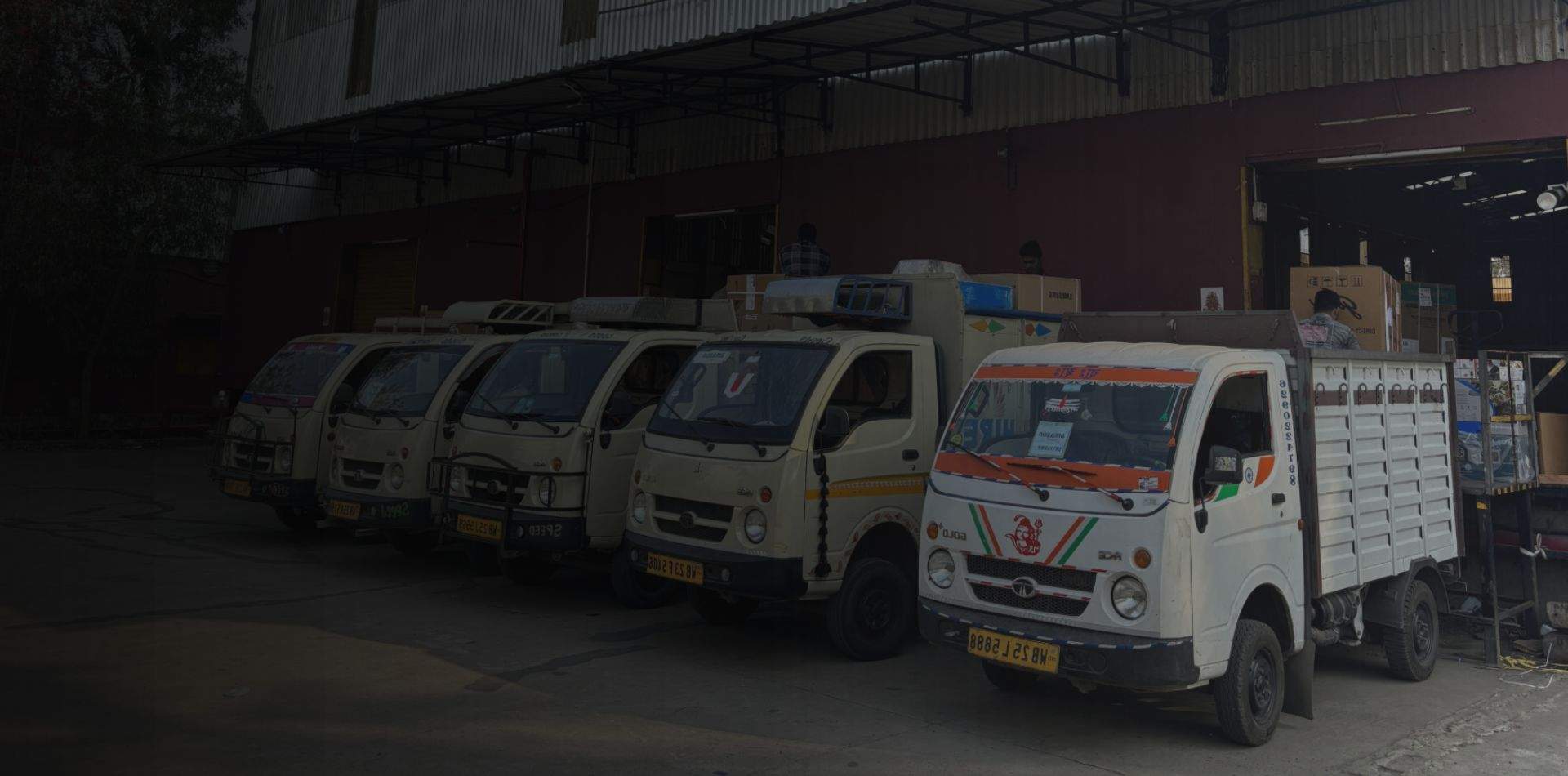


Monsoon Logistics: Keeping Freight Moving Through a Bengal Rainy Season
Three months a year, the road network behaves differently. Planning for it in May costs very little. Discovering it in July costs a great deal.
The monsoon does not stop freight moving in West Bengal. What it does is change which assumptions still hold, and most delays during those months come from plans written as though nothing had changed.
Routes stop being interchangeable
For most of the year, two routes to the same district town are broadly equivalent and we pick on distance. Between June and September they are not equivalent at all. One of them has a stretch that holds water for six hours after heavy rain, and the other does not.
We keep a monsoon variant for every regular route. It is often longer. It is reliably faster in the months that matter.
Loading changes, not just driving
This gets overlooked. Goods that are perfectly fine on an open vehicle in March need covering in July, and covering takes time at the dock that nobody has budgeted:
- Sheeting and securing adds ten to fifteen minutes per vehicle.
- Cartons need to come off the floor at both ends, not just in transit.
- Paperwork gets wet, which sounds trivial until a proof of delivery is unreadable.
Half the monsoon delays we see are not on the road at all. They are at a loading bay that planned for a dry-season turnaround.
Delivery windows move earlier
Afternoon rain is more predictable than morning rain across most of the state. Where a receiving site can take goods earlier, we move the window forward rather than build slack into the back of the day. Slack at the end of a wet day tends to get used up before it is needed.
What we ask clients to do
One thing, and it takes an afternoon: tell us which of your delivery points have covered unloading and which do not. That single list changes how we sequence an entire district, because the uncovered sites want to be first and everybody assumes they can be last.
Comments (03)
Leave a Reply
Your email address will not be published. Required fields are marked *
Tapan Das
Aug 30, 2026 at 2:30 amWe learned the sheeting time thing the hard way last year. Fifteen minutes a vehicle across thirty vehicles is most of a working day and it was nowhere in our schedule.
Sourav
Sep 19, 2026 at 2:50 amLorem ipsum is placeholder text commonly used in the graphic, print, and publishing industries for previewing layouts and visual mockups.
RD Transport Owner
Sep 19, 2026 at 2:52 amGood thank you